Panama Heart Flag: A Designer's Take on Stitching Patriotism
As someone who spends more time staring at stitch maps than most people spend watching television, I approach every new embroidery file with a mix of excitement and skepticism. We've all been there: a design looks stunning on a screen, vibrant and crisp, only to turn into a puckered mess or a blurry blob once the needle hits the fabric. That is why I took a close look at the Panama Heart Flag graphic before committing it to any real-world embroidery project. This isn't just about whether it looks cute; it's about whether it holds up under the pressure of a commercial machine and satisfies a paying customer.
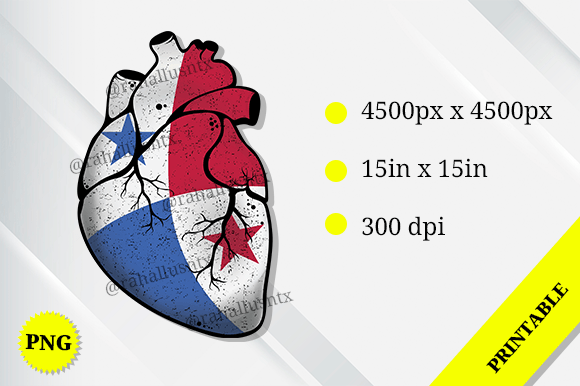
The first thing that strikes you about the Panama Heart Flag is its mood. It manages to blend national pride with a softness that standard flags often lack. By framing the iconic red and blue Panamanian stars and quarters within a heart shape, the design immediately shifts from formal heraldry to something personal and affectionate. For a designer, this visual personality is gold. It tells a story of love for heritage rather than just displaying a symbol. However, the source material is described as a watercolor clipart with a transparent background. This is where the critical eye needs to kick in. Watercolor effects rely on gradients and soft edges, which can be notoriously tricky to translate into thread.
Translating Watercolor Vibes into Thread
When evaluating this Graphics asset for Crafts, the immediate question is conversion. If you are using this for sublimation on tumblers or mugs, the watercolor aesthetic will shine without much effort. But for embroidery, we have to think about how those soft blends translate to thread colors. A true watercolor look in embroidery usually requires a high density of fill stitch work or perhaps a creative use of running stitch to mimic brush strokes.
If you are digitizing this yourself from the clipart, pay close attention to the transition between the white, red, and blue sections. In a physical finished product, sharp contrasts are easier to manage than soft fades. If the design you purchase is already digitized, inspect the stitch density. Too dense, and the fabric will stiffen; too light, and the backing will show through, ruining the vibrant illusion. The heart shape suggests a rounded flow, which generally stitches well, but the internal details—the stars and the dividing lines—require precision. A sloppy star in the center of a heart defeats the purpose of the design.
Real-World Application: The Boutique Tote Scenario
Let's walk through a realistic scenario. Imagine a client comes to your craft business asking for a unique gift for a friend moving abroad or celebrating a national holiday. They want something that says "I love Panama" but doesn't look like a generic souvenir. This is where the Panama Heart Flag shines. I can visualize this perfectly centered on a natural canvas tote bag design.
On a tote, you have enough surface area to let the colors breathe. Using a bright white thread for the background quadrants and deep, saturated reds and blues for the others would create a striking contrast against the beige fabric. The heart shape softens the geometry, making it approachable. For an Etsy seller, this kind of item has high potential. It appeals to the diaspora community looking for personalized gifts that feel handmade and thoughtful. It's not just a flag; it's a statement of identity wrapped in a symbol of love.
Another strong contender for this design is baby embroidery. Think of a navy blue onesie or a white bib. The heart motif is naturally suited for nursery decor and infant apparel. The colors of the Panama flag are bold enough to stand out on small items without being overwhelming. However, when scaling down for baby clothes, you must ensure the details don't get lost. A tiny star inside a small heart on a preemie outfit might need simplification to ensure clarity after washing.
Navigating Fabric Textures and Hoop Limitations
While the design is versatile, it is not without its challenges. As a reviewer, I have to point out where caution is needed. If you plan to use this on textured fabrics like a heavy knit sweatshirt embroidery project or a waffle-weave towel, the fine details of the watercolor style might get lost in the fabric's grain. Texture eats detail. In these cases, a solid fill or an applique design approach might yield a cleaner result than trying to replicate every subtle shade of the original clipart.
Curved surfaces present another hurdle. Embroidering this on a cap is possible, but the heart shape combined with the curved brim of a hat requires careful hooping. If the design is wide, it might distort on the front panel of a structured cap. You would need to verify the hoop size compatibility. If the design is too large for a standard cap hoop, you may need to resize it, which risks making the internal stars indistinguishable blobs of thread.
Furthermore, consider the fabric color. The Panama flag relies heavily on white. If you are stitching this onto a black or dark-colored garment, you cannot rely on the fabric to provide the white background. You would need to stitch a white underlay or a full white fill for the relevant quadrants, which increases stitch count and production time. Always test on scrap fabric of the same color and weight as your final product. This is non-negotiable for maintaining professionalism and customer trust.
Commercial Viability and Brand Consistency
For commercial embroidery ventures, consistency is key. If you are selling this as part of a collection, ensure that the Panama Heart Flag matches the quality of your other listings. Does the stitch quality match your other national flag designs? Are the thread colors consistent across different batches? Buyers engage with shops that demonstrate attention to detail. A design that looks professional in a printable mockup must deliver that same quality in hand.
This design also works beautifully for seasonal pushes. Whether it's for independence day celebrations, heritage months, or even wedding gifts for couples with Panamanian roots, the emotional resonance of the heart shape adds value. It transforms a standard custom apparel item into a keepsake. However, remember that frequent washing can degrade embroidery if the density isn't right. Advise your customers on care instructions, especially if the design uses a lot of satin stitching which can snag more easily than fill stitches.
Final Verdict for Makers and Designers
The Panama Heart Flag is a compelling asset for the right projects. It bridges the gap between patriotic symbolism and modern, affectionate design trends. Its strength lies in its versatility for gifts, boutique merchandise, and personal expression. However, its success depends entirely on execution. Do not assume the digital file is ready to run without inspection. Check the licensing terms carefully—just because it is a graphic doesn't automatically mean it includes rights for unlimited commercial resale of the digital file itself, though finished physical goods are usually fair game depending on the specific license.
Before listing this in your shop or promising it to a client, run a test. Check the tension, inspect the back of the hoop for excessive jumping threads, and evaluate how the colors pop against your chosen material. If done correctly, this design can be a standout piece in your portfolio, offering a heartfelt way for people to celebrate their culture. It is a reminder that in our world of design assets and machine embroidery design, the human touch—the choice of fabric, the quality of thread, and the care in stitching—is what ultimately sells the product.